
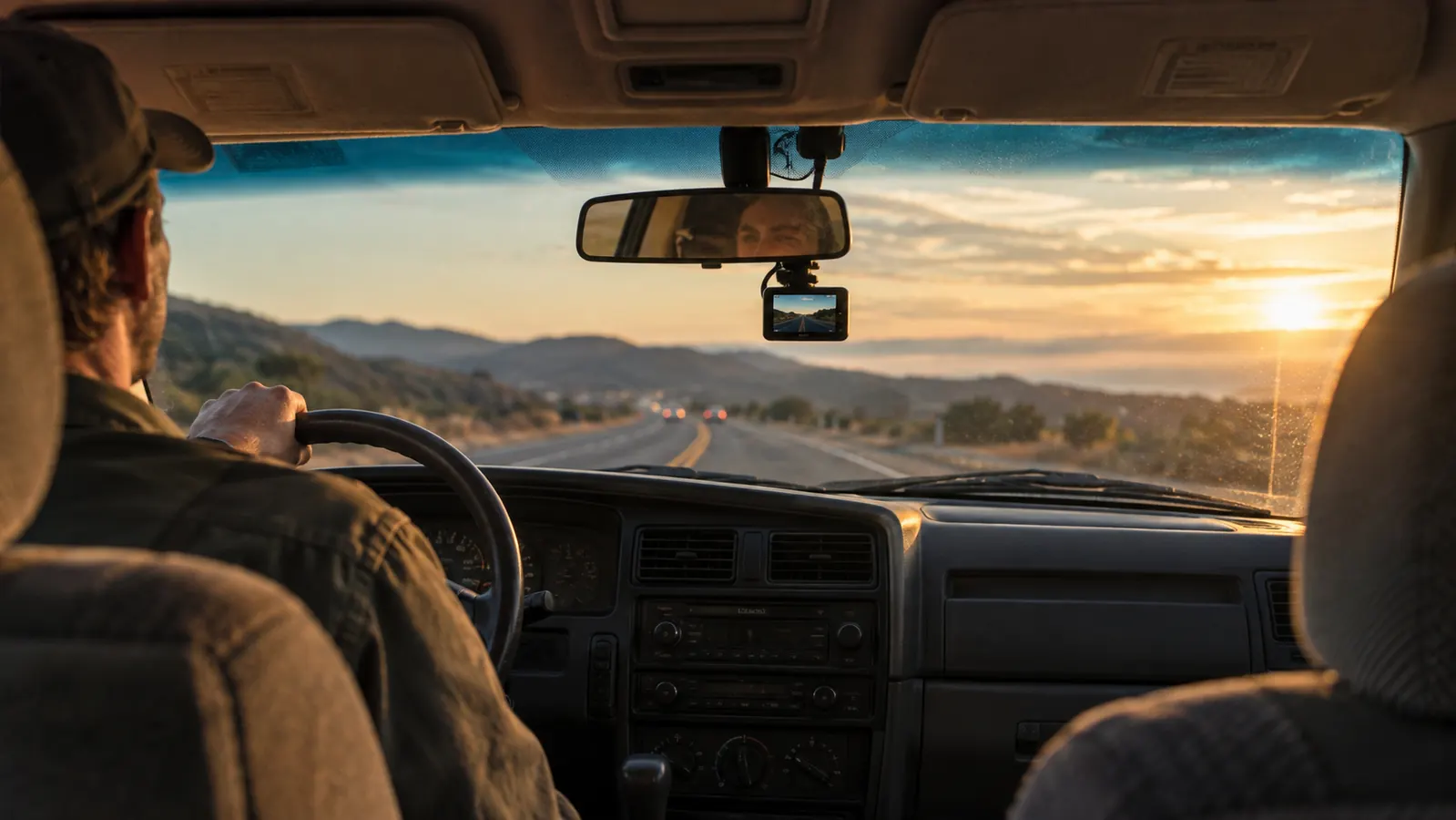
February 12 last year, I was coming back from Joplin on US-65 when a semi drifted across the line and forced me onto the shoulder. The driver corrected and kept going. There was no contact and no damage. But the whole way home I kept thinking that if things had gone differently, it would have been my word against a trucking company's insurance. I ordered a REDTIGER F7NP that night. Twelve months and about 31,000 miles later, this is how it has held up.
I am not a car-gadget guy. My Highlander is a 2016 with cloth seats and 191,000 miles on it, and I still use the factory radio. I buy a thing like this for one reason: to have proof after the fact. So this review is coming from a skeptic, and I have no reason to flatter the camera.
The Quick Verdict
The REDTIGER F7NP gives you sharp 4K front video, a decent rear camera, and a card in the box. After a year of daily use I trust it completely, and I only wish the phone app were less clunky.
Amazon Check Today's Price →After 31,000 miles, this camera has never missed a recording.
That is the honest standard I judge a dash cam by, and REDTIGER met it. Check today's price on Amazon if you want the same coverage on your windshield.
Amazon Check Today's Price on Amazon →How I've Used It
Before I ordered the F7NP, I came close to buying a Garmin Mini. It is smaller, and the Garmin name carries weight with drivers my age. But the Mini is a front-only camera, and once I priced the rear camera and a memory card on top, the total climbed past what I wanted to spend on a maybe. I also read pages for a dozen no-name cameras, and their listings were full of the kind of claims that fall apart in the reviews. What settled it was REDTIGER's rating and review count. Tens of thousands of owners have tested a camera harder than any reviewer ever will.
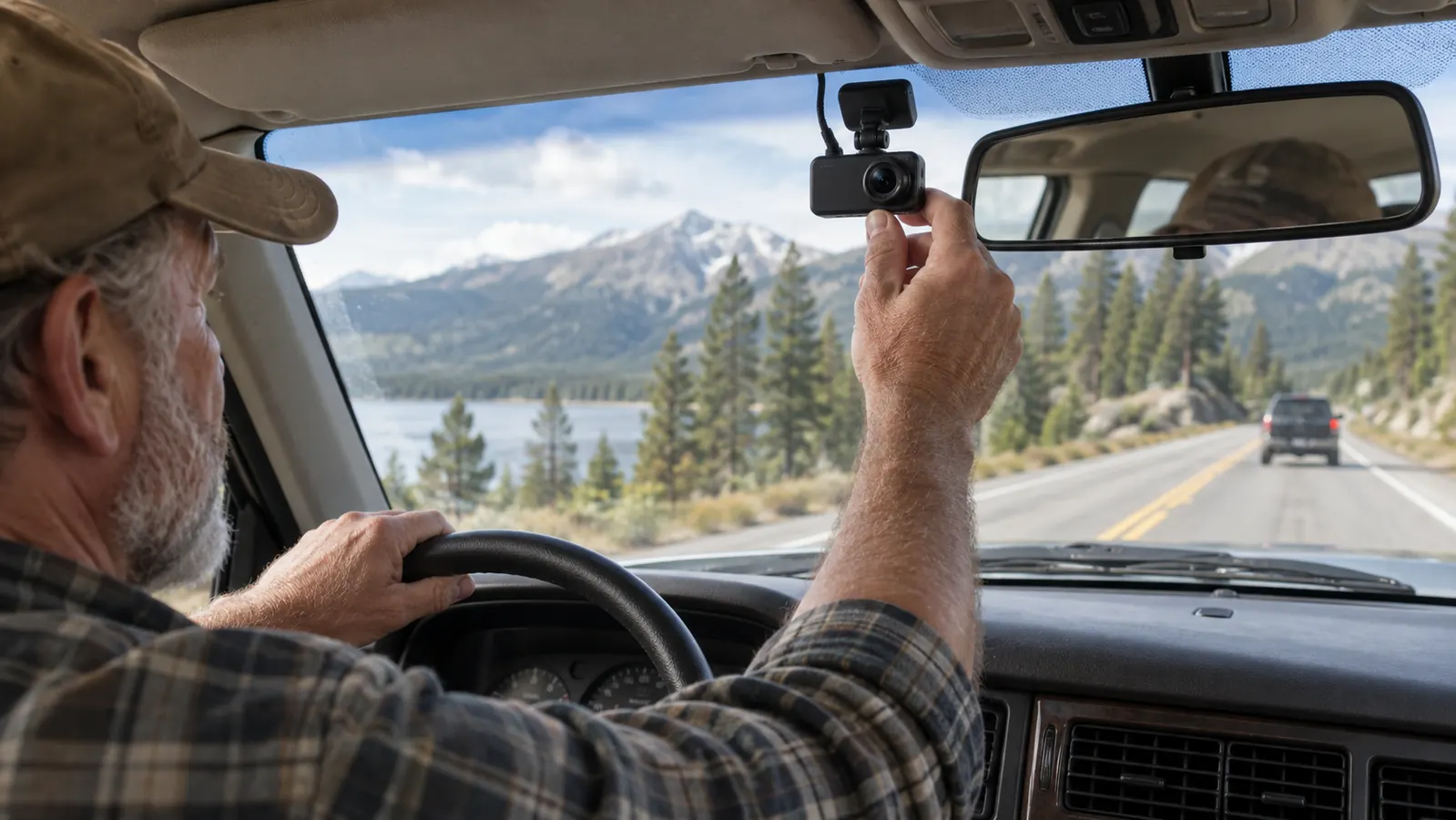
I mounted the camera myself in my garage one Sunday afternoon with nothing but the trim tool that came in the box. It sits on the windshield behind the rearview mirror, so it never blocks my view of the road. The power cable runs up the headliner, down the passenger-side A-pillar, and under the glovebox to the 12V socket. The rear camera cable follows the same route along the headliner to the back glass. Total installing time was about forty-five minutes, and the only trace is a few trim clips that look exactly as they did the day I snapped them back into place.
For the past twelve months the F7NP has recorded whenever the engine has been running. Most weeks that means about 70 miles a day on US-65, and it also means two or three overnight trips a month into Arkansas and Kansas. By my rough math the camera has logged close to 31,000 miles. It has done that through a Missouri summer that bakes a closed car, through January nights in the single digits, through rain that turns the highway into a smear of red taillights. The odometer showed just over 160,000 the week the camera went in. It will roll past 191,000 this week, and the F7NP has recorded every single mile of it.
Most days the files just sit on the card until they are recorded over. But one clip paid for the camera, and it happened in June. I was parked in a lot in Branson, and a woman in a sedan backed out of a space and into my front fender. She told her insurance company I had backed into her. I pulled the file, which showed her reversing into me with the time and date stamped on screen. Her insurer called it their driver's fault within a week. That is the honest reason most drivers eventually buy a dash cam: not for the drives that go fine, but for the one time you need to prove what happened.
Picture Quality on a Real Road
The front camera records in 4K, and on a clear day the picture is genuinely sharp. I can make out a license plate at highway speed when the car ahead is two or three car lengths away and the plate is clean. The STARVIS 2 sensor earns its keep at dusk, which on US-65 means driving straight into a low sun for twenty minutes. My old camera would have washed the road out into a white glow. The F7NP keeps enough detail that I can still tell you what the cars ahead are doing, and that matters more than any spec sheet.
At night the honest answer is that the F7NP is good, not great. It handles a dark two-lane road better than I expected, with more usable detail than the front camera of my previous setup. But physics still wins. Headlights coming toward you bloom into halos, and reading a plate on a dark car at night is a coin flip. That is not a flaw in this particular unit; it is the limit of every dash cam near this price. If a reviewer tells you otherwise about a camera in this class, they are not testing at night.
Set your expectations for daytime and twilight and you will be happy. Set them for perfect night footage and no camera at this size and price will satisfy you. For the kind of driving I do, where almost everything happens in daylight or dusk, the image quality has never been the weak link.
The Rear Camera and the Card in the Box
The rear camera is where cheap two-channel kits usually cut corners, so I watched it closely. The F7NP's rear image is softer than the front, and at night it struggles more. In daylight it is clear enough to identify the car behind you, and on the rare occasion I need to know what a tailgater looks like, it gives me that. I mounted it on the rear glass with its own mount and it has not moved a millimeter in twelve months, through washboard county roads and highway speeds.
What surprised me is how often the rear camera is the one that saves you. Twice this year I have had close calls caused by the driver behind me, and in both cases the rear view showed exactly what happened. Front cameras are for the things you see coming. Rear cameras are for the things you never see at all. I used to think a single front camera was enough. I do not think that anymore.
The included memory card is a small thing that deserves credit. My previous camera arrived without a card, and I found out the hard way that it was not recording anything. REDTIGER putting a usable card in the box meant the F7NP worked the same day it arrived, and that matters when the whole point of the camera is not missing a single mile. It also means one less thing to research, and one less hidden cost added on at checkout.
The App, the Buttons, and the Everyday Annoyances
My one real complaint is the smartphone app. The camera broadcasts its own WiFi network, and you connect your phone to that network, open the app, and pull the clip you want. The process works, but it is slow and a little fragile. I always feel one software update away from having to relearn it. When I need a file in a hurry, I take the card out and read it on my laptop instead. That is a workaround, and I should not have to use a workaround, but it gets the job done.
The buttons on the camera body are small and the menus take some getting used to, and the beeps are louder than I would like. Those are the things I noticed in the first week and stopped noticing after the second. They have never cost me a single file. If I am being fully honest, the camera does not have the polish of a phone, but I did not buy it for polish; I bought it to record the road, and it does that without complaint.
File management takes a little discipline no matter which camera you buy. The card holds a lot of footage, but it fills up, and when it is full the camera records over the oldest files. I make a habit of pulling the card about once a month and clearing out anything I might want to keep. The day of the Branson fender bender I did it right away. If you let the card sit for three months and something happens at the end of that stretch, the clip you need may already be gone. That is not a criticism of this camera; it is how every camera in this class works.
Surviving a Year of Heat, Cold, and Rain
The real test is not a test drive; it is a year of daily life. This camera has spent a full Missouri summer on a windshield that gets brutal in July. I have parked in sun-baked lots while calling on customers, and the inside of the Highlander has been hot enough to make the steering wheel uncomfortable to touch. The F7NP has baked on that glass all season and booted up every single time I turned the key. It has also sat through a January cold snap with nights in the single digits, and through it all the mount never loosened and the image never changed.
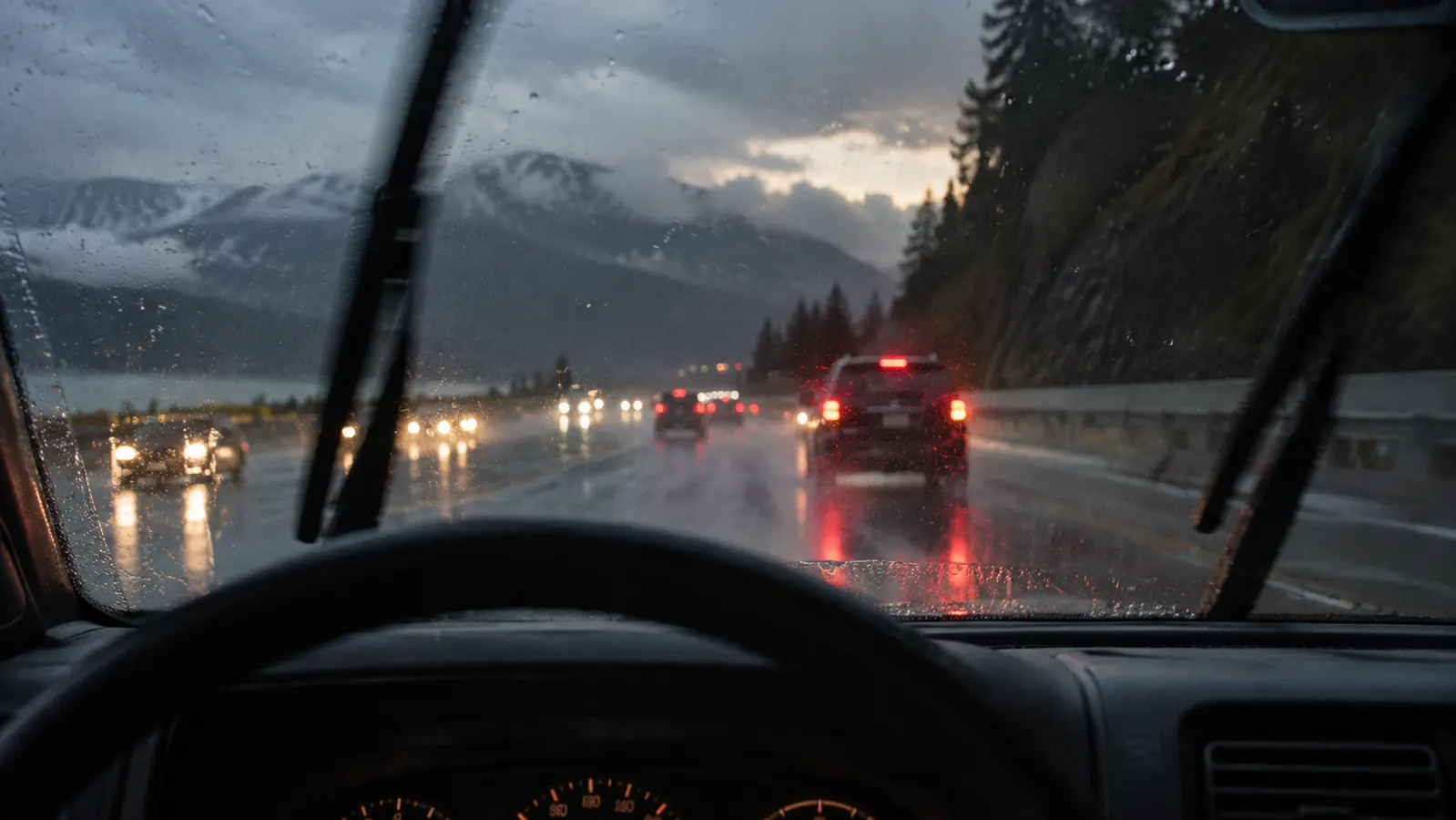
Rain is the condition I worried about least and it has been the most pleasant surprise. On wet nights the image gets muddier, which is true of every camera, but the F7NP still records the road, the lane lines, and the car ahead well enough to tell what happened. On my route, a 70-mile drive through a thunderstorm at dusk is exactly the kind of moment you would want on video. The camera has handled that moment more than once and never missed a beat.
One small thing showed up around month nine. The plug works its way loose in the 12V socket every now and then, and the camera lets me know with a power-down beep. I push it back in and it is good for another few weeks. If your camera ever goes silent, check the plug before you blame the unit. That is the kind of detail that only comes out in a long-term review.
What I Liked
- Sharp, detailed front video in daylight and at dusk
- Rear camera included, so you get two channels from day one
- A memory card comes in the box, which is rarer than it should be
- The mount stayed put through a full Missouri summer
- Booted up reliably every single time for a year
Where It Falls Short
- The phone app is slow and awkward when you need a clip fast
- The buttons are small and the menus take patience
- Rear camera image is noticeably softer than the front
- Night video is good but not great, and oncoming headlights bloom
A year and 31,000 miles later, it has booted up every single time I turned the key. For a camera that lives on a hot windshield, that is the whole job.
Who This Is For
If you are reading this and nodding along, you are probably the driver this camera is for. You drive the same road most days, your car is paid off and you plan to keep it that way, and you do not want to think about gadgets; you just want them to work. The F7NP is for the person who wants front and rear coverage, wants a card in the box so it works today, and does not want to spend several times more for a name that comes with a premium. In the year I have owned it, it has quietly done exactly what I asked of it.
This camera also makes sense for the trips I have planned for retirement. A couple of years from now I want to be the guy who packs a cooler and takes the long way, and unfamiliar roads are exactly where I would want a record. I have already run the F7NP on overnight trips into Arkansas and Kansas, and once it is mounted I forget it is there. That is the highest compliment I can pay a car gadget.
Who Should Skip It
Skip this camera if you want something the size of a key fob tucked behind the mirror. Skip it if the thought of connecting your phone to the camera's WiFi network makes you tired. And skip it if you only drive a few thousand miles a year; for that kind of use, a simpler single-camera model will do everything you need for less money and less fuss. This camera makes the most sense for high-mileage drivers, because a year of use is what it is built for.
One thing I chose not to do is hardwire the camera into the fuse box. A hardwired install keeps the 12V socket free and makes parking mode possible. It also means running a wire under the dash and tapping a fuse, which is a job I would rather leave to a shop. For now the 12V socket is fine, and I unplug the camera when the car will sit for more than a day so I never worry about the battery. If true around-the-clock parking coverage matters to you, count on the extra work and the extra cost, and know that before you order.
If you spend real hours behind the wheel, this is the camera I would buy again.
It is not perfect, and I told you exactly where it falls short. For a daily driver it has more than earned its place on my windshield. Check today's price on Amazon if you want the same peace of mind.
Amazon Check Today's Price on Amazon →