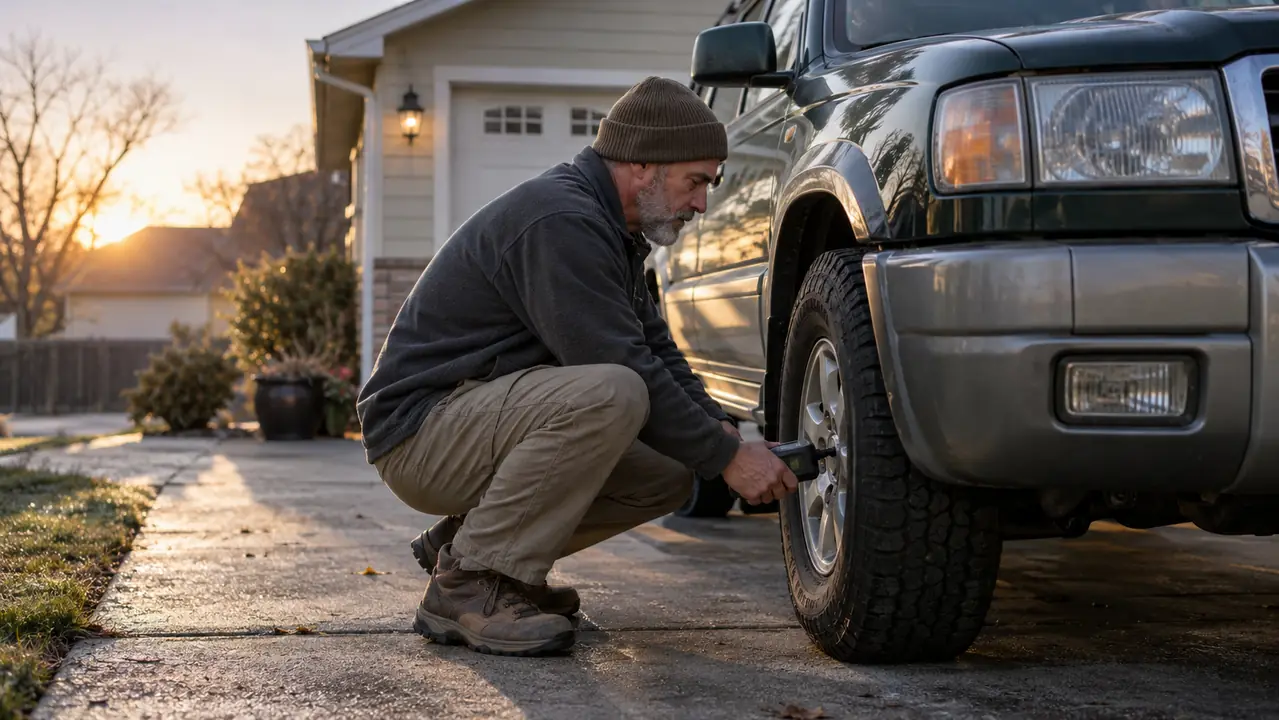
At six in the morning in late July, in the parking lot of a gas station just off US-65, the tire pressure light on my 2016 Highlander was glowing amber. I had seventy miles of two lane highway ahead of me and an 8 a.m. appointment at the end of it. The air pump by the convenience store wanted a credit card, the hose on the next pump had a split in it, and the gauge on the handle was worn so smooth that I could not read the numbers. I stood there long enough to count the cost of a missed call and a tow truck. That was the morning I decided to stop depending on somebody else's air pump.
A few pounds of pressure sounds like nothing, and it is not nothing. For checking and filling tires at home, I use the AVID POWER cordless inflator, and the routine below is the one I have followed every month since. The Department of Energy says fuel economy drops about 0.2 percent for every pound a tire is low, and the gas money is honestly the least of it. A soft tire runs hotter, the edges of the tread wear unevenly, and a heavy vehicle gets vague steering at highway speed, which is the last thing you want on a long drive. The fix takes about five minutes once a month: a gauge you trust, a portable air source, and the number that belongs on your vehicle's door sticker.
The inflator that ended my gas station detours
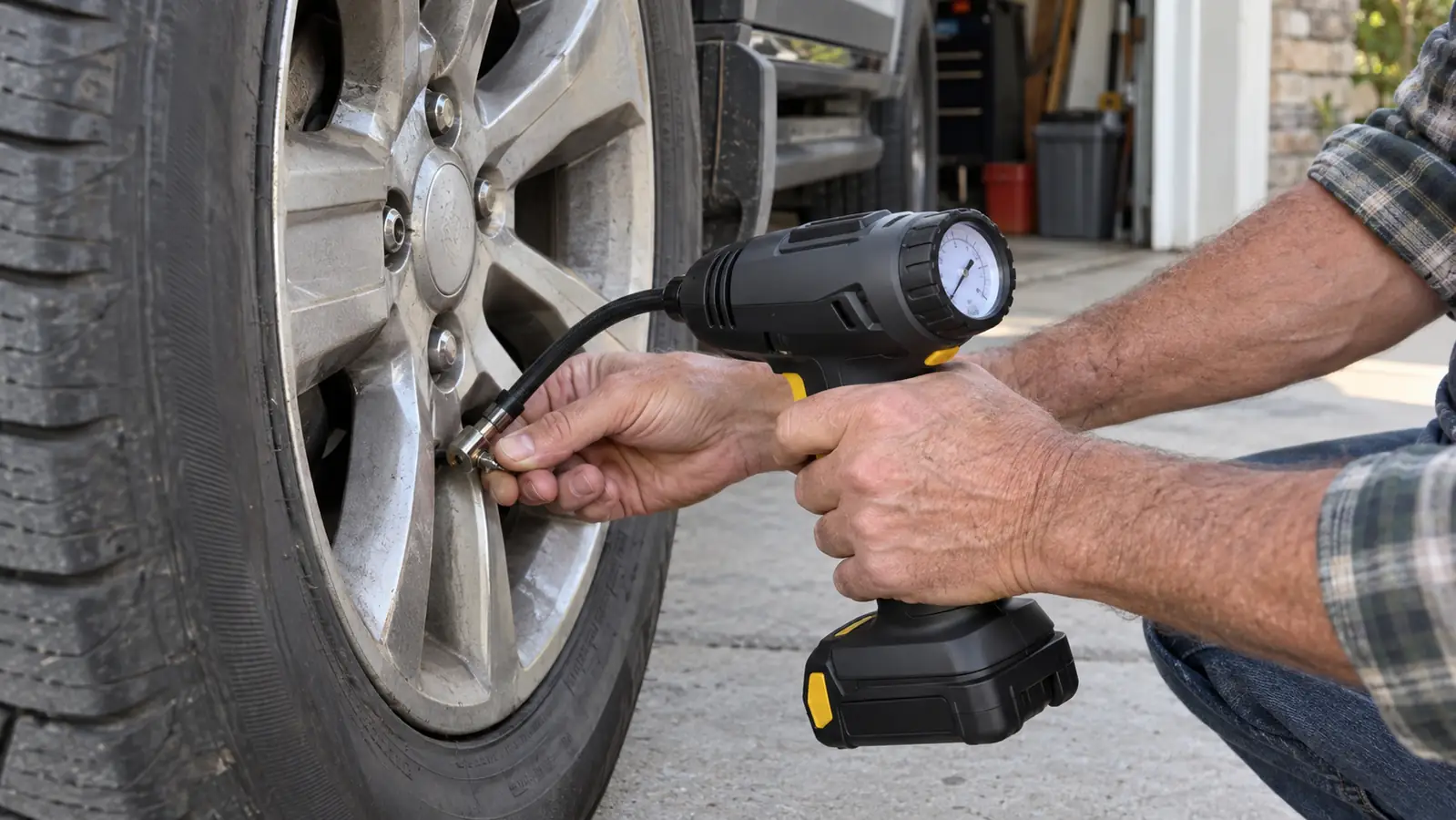
The AVID POWER cordless inflator runs off a 20 volt battery pack, so you are not tied to a wall outlet or a station hose. It has a gauge built into the body, which means the checking tool and the filling tool are the same unit. Check today's price on Amazon before you dig for quarters again.
Amazon Check Today's Price on Amazon →Step 1: Find the number on the door jamb, not the tire sidewall
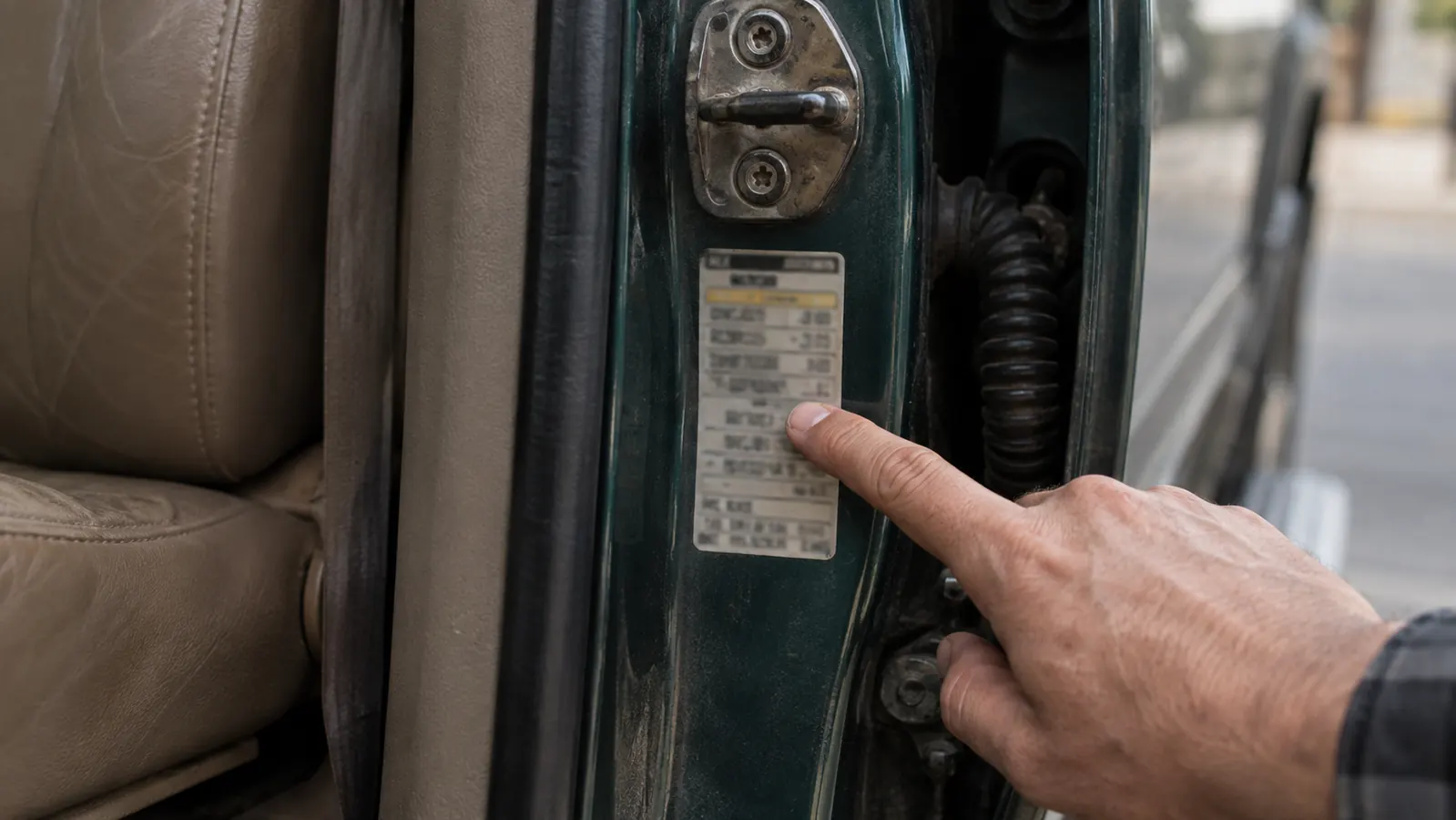
Your vehicle's recommended tire pressure is printed on a sticker on the driver's side door pillar, down near the latch, and it is usually repeated in the owner's manual. On my Highlander the sticker calls for 33 psi cold, front and rear. That is the number I use every time, whether the car is empty or loaded for an overnight trip. Every vehicle has its own figure on that sticker, and the figure belongs to that vehicle and its factory tire size.
The number molded into the tire sidewall is a different animal. Look at the tires on most crossovers and you will see something like 44 psi max printed there. That 44 is the most air pressure the tire can safely hold, not the setting the vehicle needs. Fill a tire to its sidewall maximum and you get a hard ride, quick wear right down the center of the tread, and noticeably less grip when the pavement is wet. The sidewall number belongs to the tire. The door sticker belongs to the vehicle. When the two disagree, trust the vehicle.
There is a phrase at the top of most of these stickers, and it matters: cold tire pressure. Thirty three pounds is the target for a tire that has been sitting, not one that has been running. That detail is the whole key to doing this the right way, so the next step is making sure the tires are actually cold before you put a gauge on them.
Step 2: Check before the tires warm up
Cold means the vehicle has been parked for at least three hours, or driven less than a mile at city speeds. Early morning is the easiest time to get a true reading, which is why I do this before the first drive of the day, while the Highlander is still sitting in the garage or the driveway. Once tires roll, the rubber flexes and warms up, and the air inside expands. After half an hour on the interstate, a tire can easily read three or four pounds higher than it will read tomorrow morning in the same spot.
That warm reading is not the one to use. If you fill a hot tire to the cold number on the door sticker, the tire ends up low once it cools down, and if you aim for the hot reading instead you have simply postponed the job. Park in the shade and wait for the tires to cool, or better, do the job first thing in the morning. On a hot Missouri afternoon, the sun can heat one side of the car more than the other, which is just another reason not to trust a reading taken after the car has been sitting in a sunny lot.
Real example: a while back I checked the tires after a long drive and saw 36 pounds on the gauge. The door sticker says 33 cold. I let the car sit overnight, checked again before starting it, and every tire read 33. Cold tires, cold reading, no guesswork. That is the whole system.
Step 3: Take a reading you can trust from all four corners
Once the tires are cold, the rest is mechanical. The valve stem is the little metal nipple that sticks out of the wheel, and the black cap on top only keeps dirt out of the valve. Unscrew it and set it in your pocket or the cup holder where you will find it again. Press the gauge straight onto the stem, firmly, and hold it still. If you hear a hiss, the gauge is not seated, and the reading you get while air escapes is useless. A clean push gives a clean number.
A digital gauge, a pencil gauge, and the gauge built into the body of a portable inflator all do the same job. I use the gauge on the AVID POWER inflator because it is the tool already in my hand, and it reads within a pound of my old pencil gauge every time. Read the first tire, move around the car, and read the rest. Do not assume the front and rear share a pressure: many vehicles call for different numbers front to rear, and some call for higher pressure when the vehicle is loaded.
Write the four numbers down or just remember them. The point is to know how far each tire is from the door sticker before you add anything. If they are all within a pound or two of the target, you are done and you can put the tools away. If one is off by five or six pounds, you have found the reason the warning light came on in the first place.
Step 4: Fill in short bursts and respect the last pound
The nozzle on a tire inflator needs the same straight push the gauge does. If it has a clamp, flip the lever after you seat it. If it threads on, spin it until it stops. Listen for a hiss once you start the flow; a hiss means the air is going past the valve instead of into it, so shut it off and reseat the nozzle. When the connection is quiet, turn the inflator on and let it run.
Air moves faster than you expect, and it is easy to add six pounds while you are still getting the nozzle seated or looking for the switch. Work in bursts near the end: run it for a few seconds, shut it off, and read the gauge. Let the reading settle for a moment after the airflow stops, because the numbers move around right after the air shuts off. I aim for the exact figure on the door sticker, not a pound above it, because the whole point of this job is to stop guessing.
If you do overshoot, do not panic. There is a tiny pin in the center of the valve stem, and pressing it releases air. Most gauges have a small nub on the back made for this job. Let the air out in short taps, a second or two each, and recheck after every tap. When the number is right, pull the nozzle off, thread the valve cap back on by hand, and resist the urge to crank it. Hand tight is all the cap needs.
Step 5: Let the warning light reset, then recheck tomorrow
With all four tires at the door sticker number, the tire pressure light that started this whole job should go out by itself. The system reads the tires while the vehicle is moving, so it may take a few minutes of driving before it resets. If the light stays on after a normal drive, the problem is probably a slow leak, a damaged wheel, or a failing sensor. That is a trip to a tire shop, not a reason to add more air and hope.
Finish the job the next morning, before the car moves, with cold tires. Recheck all four and compare the numbers to what you filled them to. They should hold within a pound. That baseline is useful all year because pressure follows temperature: it drops about one pound for every ten degrees the air cools. When the first cold snap of autumn arrives and the light flickers on, you will know exactly what is happening instead of learning it at a gas station at dawn.
The mistake I made the first time
The one mistake I made in the early years was treating the tire pressure light as the reminder. The light only comes on when air pressure drops well below spec, often about 25 percent low, and by then the tire has been running hot and wearing unevenly for miles. The light is a warning, not a maintenance schedule. That is why the monthly calendar check matters more than the dashboard.
Set a repeating reminder on your phone for the first of the month and pair it with something you already do, like paying a bill or taking out the trash. Five minutes with a gauge keeps you out in front of the problem instead of reacting to it in a parking lot.
What Else Helps
A few small habits make the routine painless. Charge the battery that runs the AVID POWER inflator after each use, because a battery that sits in a hot garage for months will be flat when you need it. Keep the inflator somewhere you can reach without unpacking the whole cargo area. And take a close look at each tire while you are down there: cracks, bulges, or worn tread need more than air, and no inflator fixes a tire with a nail in it.
The other half of the job is paying attention between checks. A tire that needs air every week has a leak, and the right answer is a patch or a replacement, not another top off. A tire that holds its pressure month after month is a healthy tire. After a while you will know the feel of the numbers and the routine will take less time than finding a working pump at the gas station.
Five minutes once a month, and every tire on the Highlander sits within a pound of the number on the door sticker. The dashboard warning has stayed dark since I started doing it this way.
Skip the gas station air pump this month
Grab a gauge, check the door sticker, and go around the car in order. If your tires need air, the AVID POWER cordless inflator is the one I keep in the back of my Highlander, and today's price on Amazon is at the button below.
Amazon Check Today's Price on Amazon →