
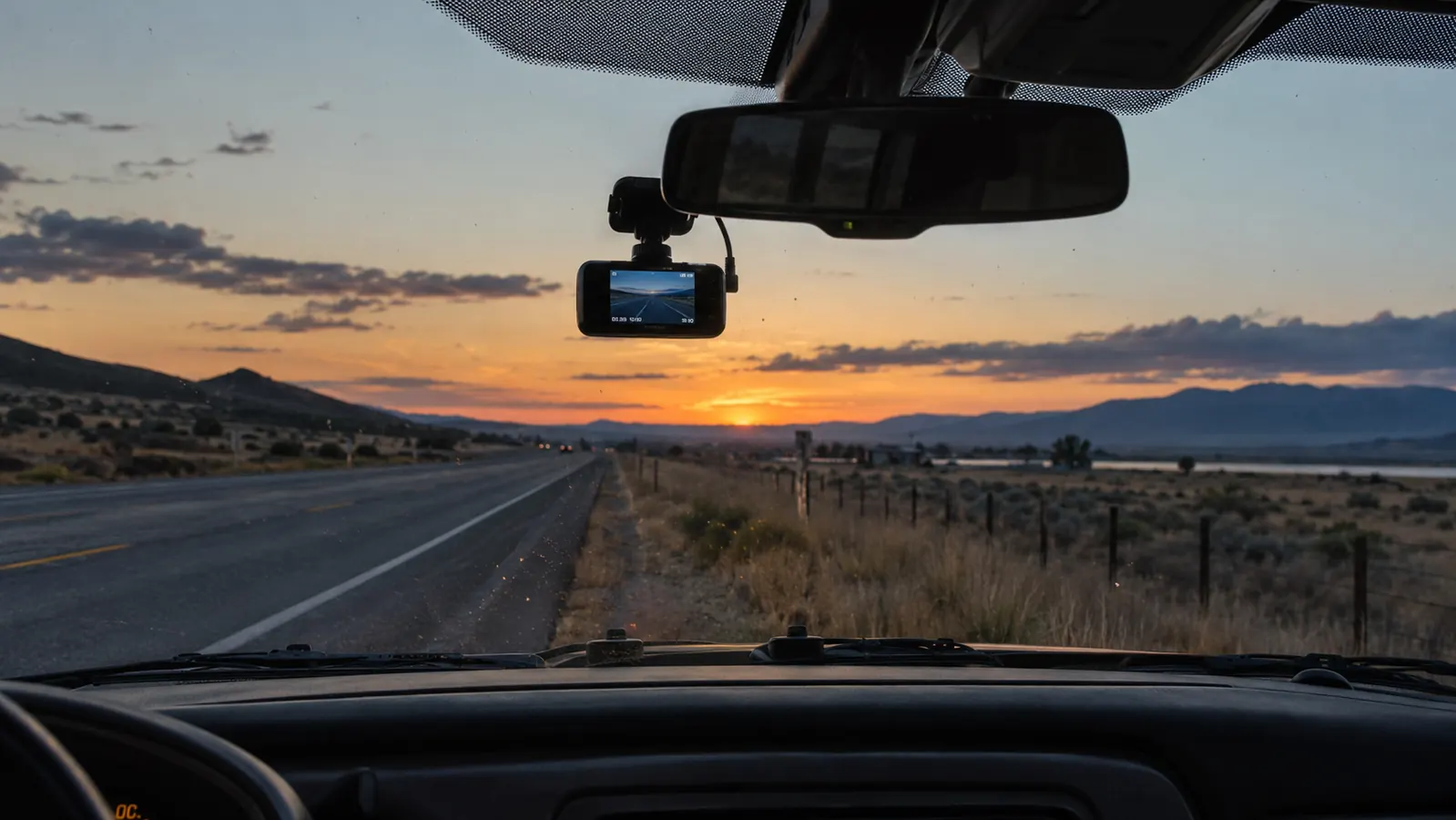
I know why you are reading this. You have watched the demo clips, the ones where a red car runs a stop sign in perfect daylight and the license plate snaps into focus like a movie still. Then you read the reviews and you wonder which part of that is real. I wondered the same thing, so about six months ago I bought the REDTIGER F7NP, the 4K front and rear model with the STARVIS 2 sensor, and I have driven with it almost every workday since. This review is what the footage actually looks like, not what the box makes it look like.
A little about me first, so you know who is talking. I am Curt Ramsey, I am 57, and I sell for a living. That means roughly 30,000 miles a year, most of it on the same 70-mile stretch of US-65 between Springfield and the towns where my customers are. My car is a 2016 Highlander with 191,000 miles on it, and I am not the kind of person who enjoys messing with electronics. I want a gadget that starts when the engine starts and stays out of my way. If that sounds like you, keep reading, because this is the review I wanted before I bought anything.
The Quick Verdict
The front 4K footage is sharp in daylight, and the STARVIS 2 sensor is the real reason the night footage is usable. The rear camera is a useful extra, not the headline, and the included card gets you started but not much more. Six months in, it has never missed a file. That is the honest summary.
Amazon Check Today's Price →What six months of real footage taught me
I have run the REDTIGER F7NP almost every day for six months, in rain, heat, and low sun, and it has not missed a file. It is not perfect, and this review says so in plain terms. The current price on Amazon changes week to week, so check it before you order.
Amazon Check Today's Price on Amazon →How I've Used It
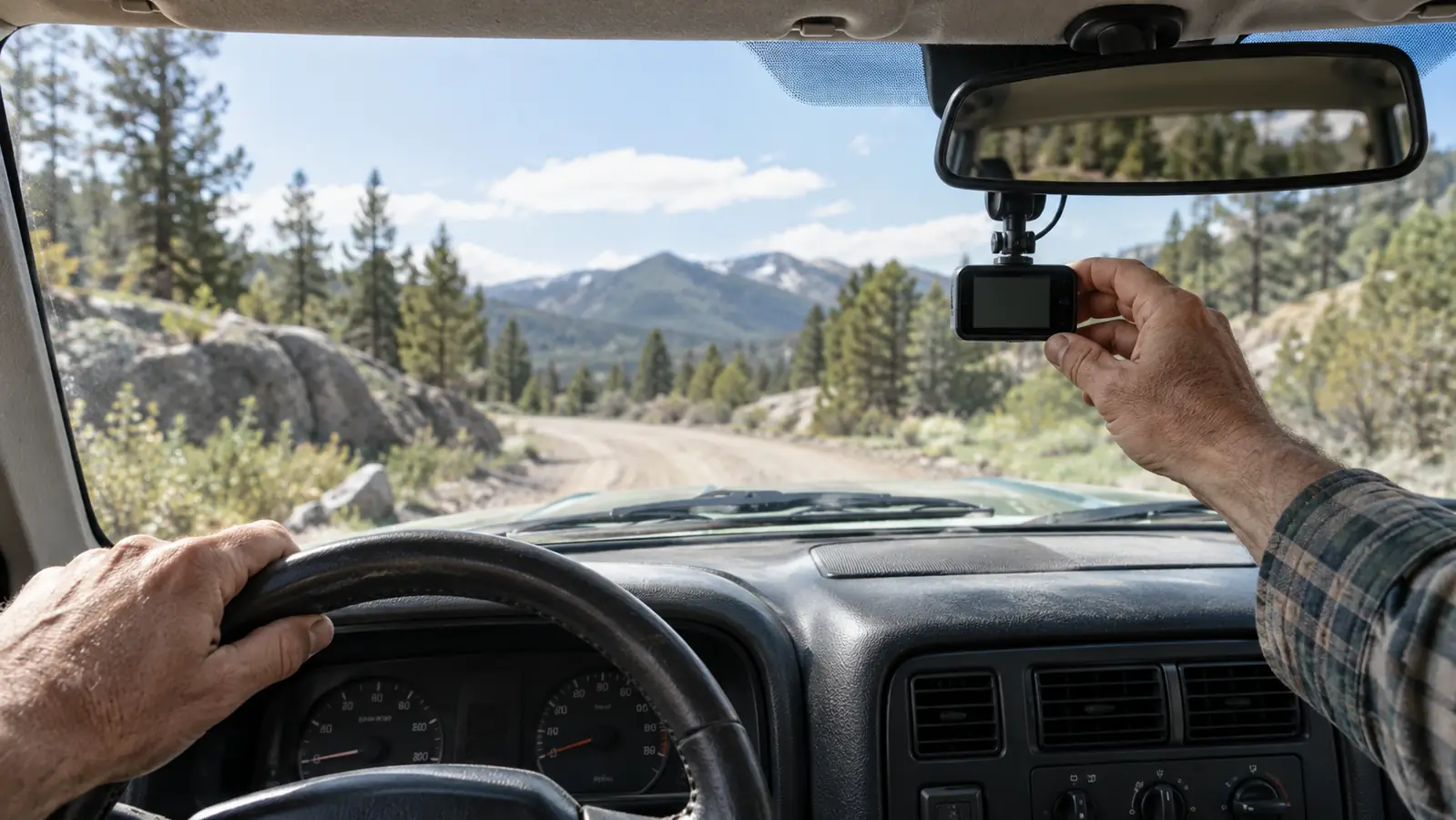
Mounting it took about half an hour, and the only tools were my hands and a plastic trim tool I already owned. The front camera sits on the windshield behind the rearview mirror, on the passenger side, so it does not block my view. The rear camera went on the inside of the rear window, and the cable ran along the headliner, down the passenger side, under the door trim, and across the back seat. I did not hardwire it. It plugs into the 12V socket, so there is a short wire visible near the dash, and after six months I have stopped pretending I will hide it someday.
I set the camera once and have not touched the settings since. The screen is small, and the buttons are not a pleasure to use, but you set them and forget them. It records in a loop, so the oldest footage makes room for the newest. Start the engine and it starts. Shut the engine off and it shuts off. That is the whole interaction, and it is exactly what I wanted, because I did not want a camera I had to think about while I was driving.
About twice a month I pull the card and go through the files on my laptop, mostly to make sure everything is still recording. Most of it is boring, which is the point. Boring footage means nothing happened on the road that day. The footage that matters is the kind you do not know you need until the other driver says something that is not true, and by then it is too late to go back and get it.
What the Daytime Footage Actually Looks Like
Here is the honest part, the part the demo videos leave out. In good light, the front 4K footage is genuinely sharp. You can read a license plate when the car is close and neither of you is moving fast. Street signs are readable. Landmarks are clear enough that you can tell where you were. Colors run a little warm, which I did not mind, because the job is evidence, not cinema.
But your real daytime is not the demo daytime. Mine is heading east on US-65 in the late afternoon, with the sun low and dead ahead, a bug strike on the windshield, and glare bouncing off the hood of a semi. In that light every dash cam on the market struggles, and the REDTIGER is honest about it. The footage is still usable, still clear enough to tell what happened, but it is not the crisp clip from the box. I say this so you set your expectations before you order, not after.
One thing that surprised me is how much the windshield itself matters. The camera can only record what the glass lets through. A clean windshield on a bright morning gives you footage that looks like the demo. A dirty windshield at dusk gives you a blurry smear, and no camera on earth fixes that. The biggest upgrade I made was washing the glass more often. It cost me nothing, and it improved the footage more than any setting on the camera.
What the Footage Looks Like at Night
Night is where cheap dash cams fall apart, and this is where the STARVIS 2 sensor earns its keep. On a dark county road with no streetlights, the front camera still shows the road, the shoulder, and a deer before it bolts. I did not expect that from a camera in this price range. It was the thing that impressed me most in the first month, and it is the reason I would not trade down to a cheaper model.
But let me be plain about the limits. At night a license plate is readable only when you are close and the other car is not moving fast. Headlights from oncoming traffic wash out the frame for a second. Your own headlights light the road ahead, but the edges of the frame go dark, which is physics, not a defect. If a review somewhere promises perfect night plate reading at speed, that reviewer did not test it on a real dark road.
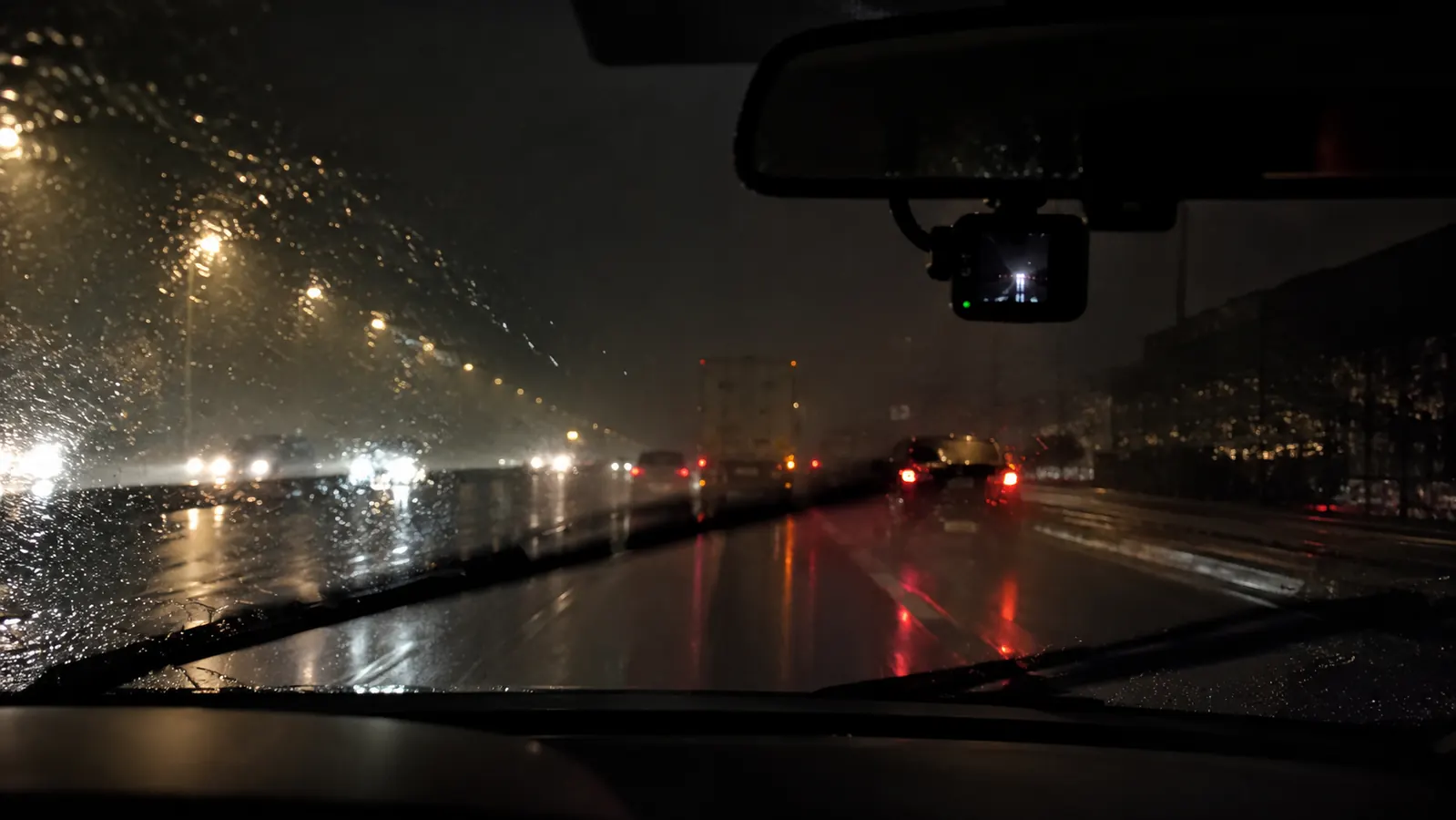
Rain makes it harder, and I have plenty of rain footage to judge it by. Wet glass turns every headlight into a bloom of light, and the wiper blade smears exactly what the camera is trying to record. The footage is still there and still usable as evidence, but it looks like rain footage, because it is rain footage. Anyone who promises crystal clear video in a downpour is selling you a demo, not a camera.
Boring footage means nothing happened that day. The footage that matters is the kind you do not know you need until the other driver says something that is not true.
What Nobody Tells You Before You Buy
The card in the box is a start, not a solution. It is nice to open the package and have everything you need for the first day, and REDTIGER deserves credit for that. But 4K footage eats storage quickly, and a working card that fills up will quietly erase the oldest files while you drive. After the first month I put in a larger card, because I wanted more than a few days of driving stored before the loop came around.
Heat is the thing nobody warns you about, especially here in Missouri. The car sits in a parking lot in July, and the temperature inside climbs past what you would believe. A dash cam is electronics, and electronics do not love heat. I have not had a single failure in six months, but I also do not leave the camera baking any longer than I have to. On the rare days when I know the car will sit in full sun for hours, I take it down. The people who leave theirs up through a Missouri summer are the ones writing the angry one-star reviews.
The rear camera is the part of the package that sounds better than it is. The rear footage is lower resolution than the front, and on my car it looks through the rear window, which is never going to be the clearest glass on the vehicle. But that is not why I bought it. I bought it for the moment someone rear-ends you and then tells the insurance company you slammed on your brakes for no reason. The rear camera is insurance against that conversation. Running the cable to get it there is the most annoying part of the whole installation, and once it is done, you never think about it again.
You will forget it is there, and that is the honest truth of owning a dash cam. After two weeks it becomes part of the car, like the rearview mirror. Then one evening you are sitting at a gas station and you watch a fender bender happen right in front of you, and you realize the camera caught the whole thing. That feeling is worth more than anything on the box.
You also need to learn how to erase everything, because you will eventually hand the camera to someone or sell the car. The manual explains it, but the short version is that you format the card in the camera, not in your computer. That was a lesson I learned after the card would not record one morning. I formatted the card on my laptop, put it back, and the camera would not write to it. Formatting it inside the camera fixed it in about a minute. The manual said to do that from the start. I did not read the manual.
How It Has Held Up Over Six Months
Six months is not a decade, but it is long enough to know whether a gadget will embarrass you. The REDTIGER has started every single time I have started the car. I have pulled the card after a Missouri summer afternoon in a parking lot, and the files played back without a hiccup. The mount has not slipped. The cable has not frayed. The buttons still click. For a device that lives on a windshield through heat and cold, that is a strong record.
The moment that made me a believer happened on a Thursday afternoon east of town. A car three vehicles ahead blew through a stop sign, and a truck had to stand on the brakes. Nobody hit anybody. But I went home, pulled the card, and watched it from two angles on my laptop, because I could not believe what I had seen. Nobody needed the footage that day. That is exactly the point. You buy the camera for the day somebody does need it.
In that time I have also learned which problems are mine, not the camera's. The wire runs the way it runs because I routed it that way. The reflections come from the glass that has been on this car for 191,000 miles. The camera records what is in front of it. That feels like an obvious thing to say, until you read reviews blaming the camera for the windshield.
Other Dash Cams I Considered
I did not walk into this knowing the REDTIGER was the right answer. A friend swears by his Garmin, and another friend bought a VIOFO after a crash he was in. Both are good cameras, and both cost more than this one. I also looked at a no-name camera for about half the money, but the reviews scared me off. The complaints were not about the picture. They were about files not saving and cameras dying in the heat. A dash cam that does not save the file is just a small light on the windshield.
So I settled on the REDTIGER F7NP for three reasons. The front camera is 4K with the STARVIS 2 sensor, which mattered because I do much of my driving at night. The rear camera came in the same box, so I did not need a second unit and a second mount. And the rating, about 4.2 stars across more than 25,000 reviews, told me the common failures were not common here. No product with that many reviews pleases everybody. But the honest complaints matched what I could live with, and the praise was specific enough to trust.
What I Liked
- Front 4K footage is sharp in normal daylight
- STARVIS 2 sensor gives usable night footage on dark roads
- Starts and stops with the car with no attention needed
- Rear camera included in the same box
- Memory card included, so it records on day one
- Survived a full Missouri summer on the windshield
Where It Falls Short
- Rear camera quality sits clearly below the front
- Menus and buttons are fiddly when you need to change a setting
- The included card fills quickly with 4K footage
- No parking mode without buying a hardwire kit separately
- One power wire stays visible unless you hardwire it
Who This Is For
Buy the REDTIGER F7NP if you drive a lot, if you have ever had a close call and wished you could prove what happened, or if you have simply stopped trusting the other drivers on your road. It fits a car of any age, because all it needs is a 12V socket and a flat spot on the windshield. It is especially right for people who do not enjoy gadgets, people who want the camera to do its job and never ask for attention. That is this camera's best quality, and it is the one the spec sheet cannot show you.
Who Should Skip It
Do not buy this camera expecting it to watch your parked car. Parking mode exists, but it needs a hardwire kit and a little wiring work, and I have not done it. Do not buy it expecting perfect plate reading at night on a highway, because no camera at this price does that, and anyone who says otherwise is guessing. And if one visible wire near the dash would drive you crazy, budget for a professional installation from the start. Those are honest boundaries, not failures. Stay inside them and the camera will earn its place on your windshield.
If you are still reading, you are probably the person I wrote this for. You do not want a lecture about cameras. You want to know whether this one earns its place on your windshield for the next few years. I cannot promise it will last forever, because I do not know that yet. I can promise it has done everything I asked for six months, and the footage has been there every time I looked for it. That is the part the spec sheet cannot tell you.
Six months later, I would buy it again
That is the honest bottom line. If you put a camera on your windshield, the REDTIGER F7NP does what it promises in the conditions you actually drive in. Check the current price on Amazon, read the recent reviews, and decide for yourself.
Amazon Check Today's Price on Amazon →